Sunday, January 5, 2020

Rivière Haut du Cap (Mapou), Cap Haitien


In August 2019 I was part of a biological assessment team that surveyed the Haut du Cap River in Cap Haitian, Haiti’s second largest city. Don and I surveyed the aquatic environment of the river, surrounding wetlands, and tributaries, with a botanist and two ornithologists. The river empties into the bay in Cap Haitian where it historically was an estuary. However, people have cut down the mangroves in and along the estuary and have moved in. Every year their homes flood. The area is full of trash and fecal bacteria. People say they don’t see the quantity and sizes of fish they used to see here. Protecting the river and its mangroves would have protected the city from flooding and provided more fish for food. We hope that this survey can increase awareness of the importance of protecting natural areas in Haiti.
The old colonial bridge over the Haut du Cap.

Houses along the river.

Walkway to the boat taxi.


Sunday, March 17, 2019

A successful 2019 Conférence Environnementale!

Thank you everyone who attended the 2019 Conférence Environnementale at UCNH in north Haiti. Speakers included:

UCNH President Dr. Dona Darius - Opening remarks

Agr. Robert Brunet - 

Dr. Hector Fabian, CFAIM & UCNH - Stratégie de Gestion des Ressources Naturelles par le CFAIM

Minister of the Environment of the North

Josué CÉLISCAR, FoProBiM - The Importance of Coastal and Marine Resources in Haiti 
Berlin Desir - Le changement climatique en Haïti: Vulnérabilité et impacts
Prof. Debbie Baker, UCNH - The Importance of Environmental Education
Agr. Guy Buckmaster - Reforestation initiatives of UCNH
Dr. Henri-Claude Telusma, UCNH - Action Universitaire pour la Protection de l’environnement - Le vendredi 22 mars 2019 - vous êtes invites a prendre part avec nous!
UCNH Past President Dr. Jules Cassius - Closing prayer


Thursday, January 31, 2019

Conférence Environnementale - 15 March 2019

Friday 15 March 9am - 1pm, followed by lunch. 7am bird walk and campus tour.

To present and discuss environmental work and organizations in the north of Haiti.

Location: Université Chrétienne du Nord d'Haïti, Haut Limbe, 1 hour drive from Cap Haitien
https://goo.gl/maps/QRo8Xn3UGu32 If you are coming from Cap on Rt Natl 1, after you climb the steep hill and have finished the descent, look for the yellow C.A.M. sign on the left and turn there!

Coming from Limbe, look for the yellow C.A.M. sign on the right before you begin the climb up the steep hill.

Keep going until you see the ocean scene mural on the right - go through the gate. Parking available on campus.

Présentations par:
• Societe Audubon Haiti - http://audubonhaiti.org/
• Fondation pour la Protection de la Biodiversite Marine (FoProBiM) www.foprobim.org
• Ministère de l'Environnement d'Haïti
Berlin Desir - Leader de la réalité climatique
• Debbie Baker – Éducation environnementale
• Agr. Guy Buckmaster - UCNH Reforestation and Restoration Initiative

Booths/posters about environmental work in Haiti welcome! Please contact Debbie Baker naturesphoto@hotmail.com.

Morning walk to see the birds on campus! Over 30 species here!

Étudiants avec ID/Students with ID – free registration, nominal lunch fee.
Lunch and registration fees (nominal) and process to be announced!


Sunday, January 6, 2019

Environmental Education in Haut Limbe

Evangelic Baptiste
In Nov. 2018 my translator and I started going to schools in Haut Limbe to teach about the importance of birds in Haiti’s environment. As in other communities, the children’s first response to the question “Do you like hawks” is “no, they eat chickens!” We explain that hawks eat many more mice and rats than chickens, and also talk about the importance of parakeets to spreading seeds and hummingbirds in pollinating. Many boys have killed birds with slingshots, including my translator. He regrets this saying he wouldn’t have done this if only he knew that birds were important! So we are on an anti-slingshot campaign. Most of this kids in the 10 or so schools in the area know who he is and have starting telling on each other! I will keep track of our progress in future blogs.
Bon Berger (Limbe)
Bon Le Berger Kindergarten
Emmaus du Haut Limbe
Limbe Academy


Tuesday, February 13, 2018

Environmental meters for an ecology class in Haiti

Light meters
Each semester I take my Eco-201 students to the waterfall Bassin Zim near Hinche to practice a bioassessment of the watershed.  This year I used several models of environmental meters.  I had been using the Sper Scientific meter that has 4 instruments in one: temperature, % relative humidity (RH), wind, and light.  I first used this meter at the Amazon Academy in the Peruvian rain forest, where light levels do not exceed the maximum reading of 20,000 lux.  However, light levels in Haiti are higher, thus my quest to test other meters. Also the Sper meter has hold and mx/min buttons that put the readings on pause that can only be canceled by pushing certain buttons for 2 seconds. This confounds the students. Thus I purchased 3 different light meters, and 2 different anemometers (wind meter).  Here are the reviews of their use with university students in Haiti, with the color to match to the photo.  From the price you can see it is cheaper to buy light and wind meters separately.  I underlined the features I prefer.

Wind meters


Sper Scientific meter – 4 instruments, max of 20,000 lux is too low, numbers get stuck – have to press proper button 2 sec. to exit mode. Wind, temperature, and rH works fine.  Has case. Need screw driver to access 9v battery. $126.54 on Amazon Dec. 2016. Gray.

UNI-T UT383 light meter – Only light in lux or fc, max 199,999 lux. Easy to turn off hold and max/min. No case, unprotected light probe. Easy access to 3 AAA batteries. $21.99 on Amazon Dec. 2017. Red.

URCERI MT-912 light meter – Temperature and light (lux or fc), max 200,000 lux. Hold min/max 2 sec. to turn off, press hold once to turn off. Back-lit screen (will this use up batteries?). No case, attached cover for light probe! Easy access to 3 AAA batteries. $19.99 on Amazon Dec. 2017. Yellow.

Leaton Lux Meter L830 – Only light in lux or fc, max 200,000 lux. Easy to turn off hold and max/min. No case, cover for light probe. Easy access to 9v battery. Gray.

PEAKMETER MS6252B Digital Anemometer – Also has temperature and RH. Six choices for wind units: knots, m/s, km/h, mil/h, ft/m, ft/s. Backlight option. Comes with case, need screwdriver to access 9v battery. Comes with cable to download to computer. $39.95 on Amazon Dec. 2017! Yellow.


MASTECH MS625B Digital Anemometer – Exactly like PEAKMETER except green. $50.98 on Amazon Dec. 2017. Green.

Thursday, January 25, 2018

BirdSleuth Caribbean for UCC preschool

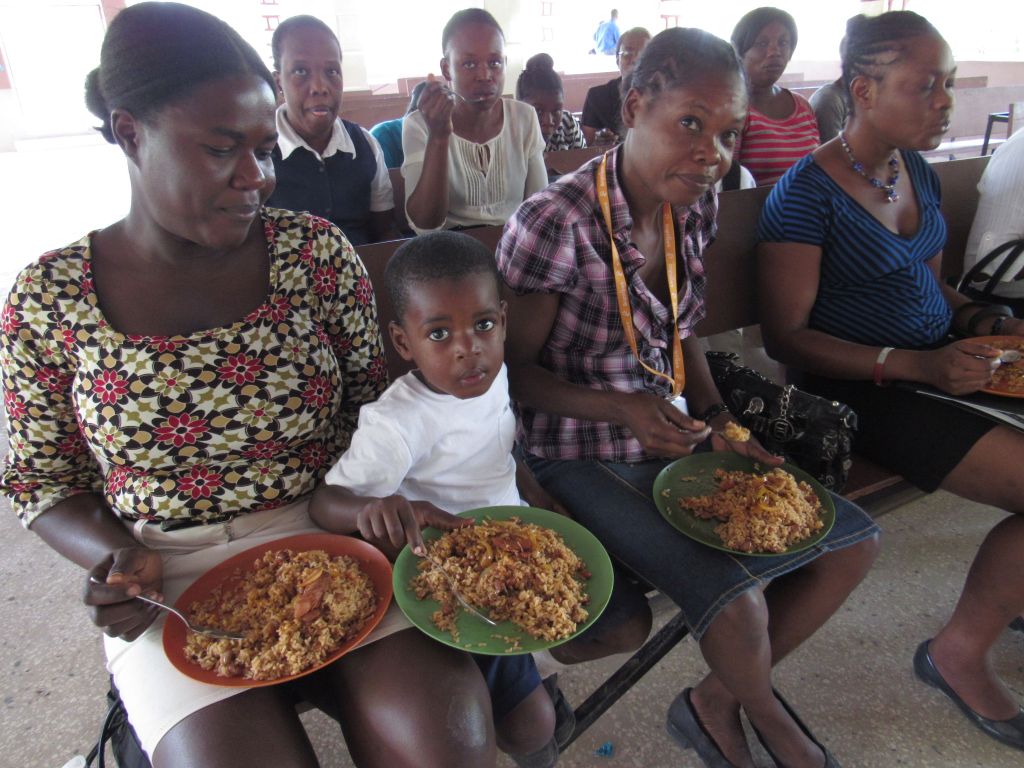
Last week I led the first BirdSleuth seminar for the preschool teachers at UCC in Caiman.  13 teachers attended, with 2 of their children who were great for demonstrating teaching techniques.  We began with a 40 minute presentation about the importance of birds, showing photos on my ipad of birds found in Haiti.  After lunch of rice and beans with onion sauce, we began the games.  I gave each teacher a habitat and a bingo card, and showed how activities can be scaled from preschool to older kids.  My translator Donacien and I demonstrated the habitat and survivor games, then all joined in and had fun playing them.  I gave the preschool a BirdSleuth manual and set of survivor, scavenger hunt, and bingo cards for their resource room.  The elementary school principle is now asking that I give a workshop for her teachers!


Wednesday, January 17, 2018

BirdSleuth Caribbean at Wynne Farm

Recently for the staff of Wynne Farm Ecological Reserve in Kenscoff I had the opportunity to teach a 2 hour seminar on the importance of birds and to Haiti share BirdSleuth Caribbean teaching activities.  I met with the 15 participants while my university ecology students took a tour of the reserve and farm.  Participants included Jane Wynne and her daughter Sarah who run the reserve, staff, student interns, and others who had strong ties to the conservation ethic of the farm.


We began with a discussion about the importance of birds in Haiti, including pest control, pollination, seed dispersal, education, ecotourism, and art (including Haitian John James Audubon).  I then introduced the Cornell Ornithology Lab BirdSleuth educational materials sent to me by Birds Caribbean.  We practiced the Habitat and Survivor gamesof Lessons 4 & 5 and feedback helped me improve my use of them.  I gave Wynne Farm two manuals and two sets of the survivor, scavenger hunt, and bingo games.  They gifted me with Rene Durocher’s beautiful Les Oiseaux d’Haiti book of bird photography.  Thank you Wynne Farm and Birds Caribbean!