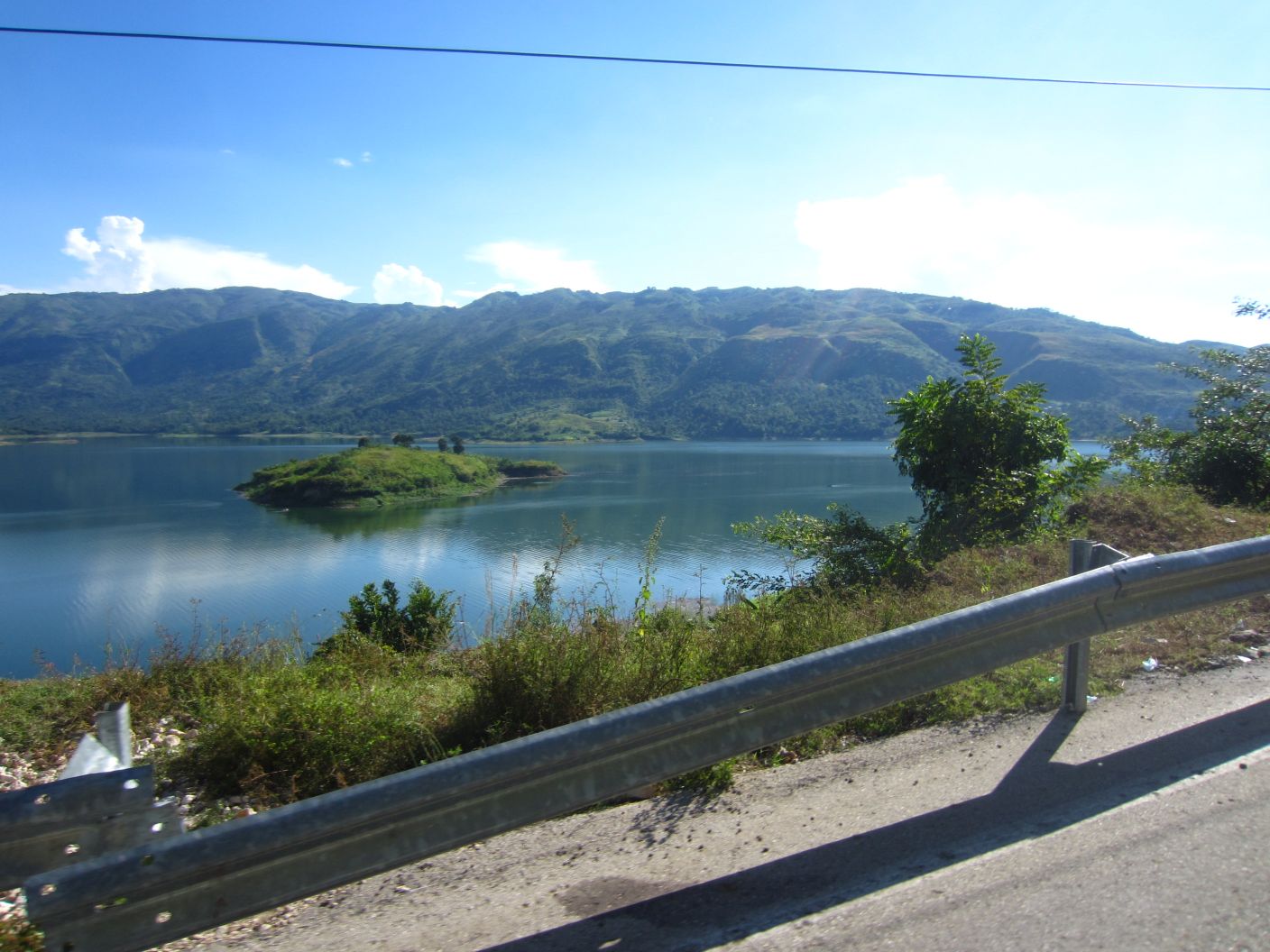
Lake Péligre, Haiti’s 2nd largest lake, is formed by a dam
on the Artibonite River. The dam was
built for hydroelectric power. The lake
can be seen on National Route 3 between Hinche and Mirebalais. You can compare lake heights in the photos
below which I take every time I go past the lake. Information on the internet suggests the lake
is filling in with silt, and the turbines are not functioning at top
efficiency. As someone who receives electricity
from this dam, I can tell you we have electricity a couple hours in the morning
and a couple in the evening.
Peligre Lak, 2yèm pi gwo lak Ayiti a, ki te fòme pa yon
baraj sou larivyè Lefrat la Latibonit. te baraj la bati pou pouvwa idwolik. ka
Lak la ka wè sou Nasyonal Route 3 ant Hinche ak Mibalè. Ou ka konpare wotè lak
nan foto yo anba a ki mwen pran chak fwa mwen ale sot pase lak la. Enfòmasyon
sou entènèt la sijere lak la se ranpli nan ak limon, ak turbin yo pa fonksyone
nan efikasite tèt. Kòm yon moun ki resevwa elektrisite sa a soti nan baraj,
mwen ka di ou nou gen elektrisite yon èdtan koup nan maten an ak yon koup nan
aswè an.
 |
| View 1 Oct. 2014 |
 |
| View 1 Dec. 2015 after a dry fall. |
 |
| View 1 Oct. 2016 |
 |
| View 2 Oct. 2014 |
 |
| View 2 Dec. 2015 - note the exposed silt upstream between the hills. |
 |
| View 2 Oct. 2016 the valley is full again, but shore line is still exposed. |
 Dr. Huggins and I presented our 2015 lake study (KBS Report181) at the 28th Annual Haitian Studies Association Conference (10 –
12 Nov. 2016) in Cap Haitien on the north coast of Haiti. The theme of this year’s conference was Haiti’s
Ecosystems: Focus on Environmental Realities and Hopes. A plenary session was about water quality and
a related book of aquatic research was provided. Other topics ranged from the portrayal of the
environment in Haitian literature, to citizen perception of environmental
issues, to caves and archeology. The
conference began Thursday with an emerging scholars session at Université
Publique du Nord au Cap Haitien south of Cap.
Most of the presentations and activities were at the hotel Auberge Villa
Cana on National Rt. 1. Saturday’s talks
were presented at the Campus Henri Christophe de l'UEH a Limonade, about 40
minutes east of Cap. Cap was flooded
from a heavy rain that fell four days before the conference, and every evening
it rained, flooding parts of Rt. 1. We
stayed in the Hotel Imperial which sat far enough back from the road to avoid
flooding. Two of my ecology students from UCCC joined us.
Dr. Huggins and I presented our 2015 lake study (KBS Report181) at the 28th Annual Haitian Studies Association Conference (10 –
12 Nov. 2016) in Cap Haitien on the north coast of Haiti. The theme of this year’s conference was Haiti’s
Ecosystems: Focus on Environmental Realities and Hopes. A plenary session was about water quality and
a related book of aquatic research was provided. Other topics ranged from the portrayal of the
environment in Haitian literature, to citizen perception of environmental
issues, to caves and archeology. The
conference began Thursday with an emerging scholars session at Université
Publique du Nord au Cap Haitien south of Cap.
Most of the presentations and activities were at the hotel Auberge Villa
Cana on National Rt. 1. Saturday’s talks
were presented at the Campus Henri Christophe de l'UEH a Limonade, about 40
minutes east of Cap. Cap was flooded
from a heavy rain that fell four days before the conference, and every evening
it rained, flooding parts of Rt. 1. We
stayed in the Hotel Imperial which sat far enough back from the road to avoid
flooding. Two of my ecology students from UCCC joined us.